


ACC Approves One-Year Extension for Railway Board Chairman Satish Kumar
The Appointments Committee of the Cabinet has extended the tenure of Satish Kumar as Chairman and CEO of the Railway Board by one further year.

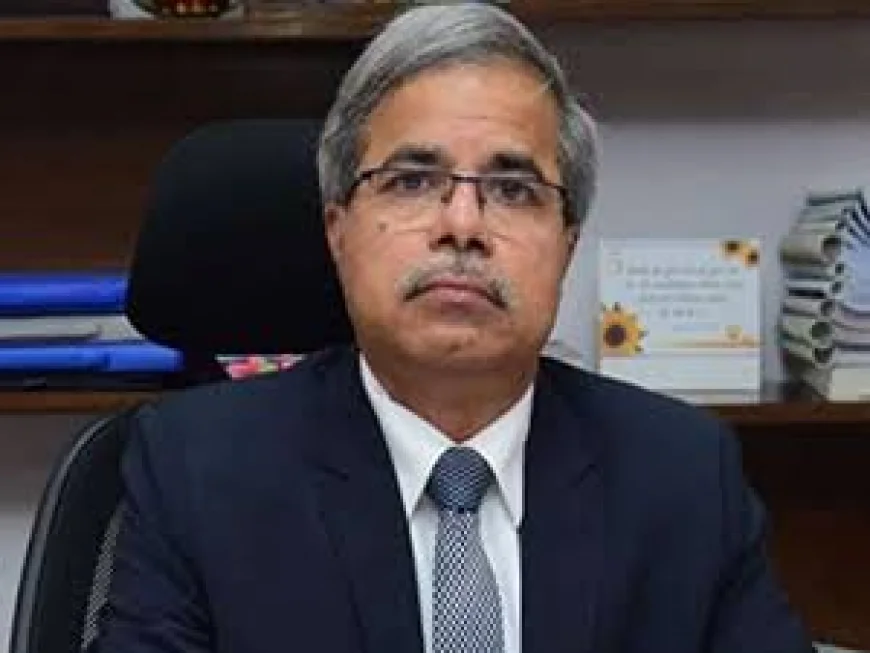
The Appointments Committee of the Cabinet has approved a further one-year extension in the tenure of Satish Kumar, a retired 1986-batch Indian Railway Management Service officer, as Chairman and CEO of the Railway Board, according to the ACC's order.
The Chairman and CEO of the Railway Board is the seniormost administrative and operational position in Indian Railways, functioning as the principal executive officer overseeing all 17 zonal railways, production units, and the Railway Board's policy and finance functions. The post was restructured from the earlier Chairman, Railway Board designation in 2019 as part of the government's unification of the erstwhile separate railway services into the single Indian Railway Management Service, with the Chairman and CEO role designed to consolidate operational authority that was previously distributed across multiple Board members. The restructuring also reduced the number of functional Railway Board members while giving the Chairman and CEO direct authority over decisions that previously required consensus among a larger board, a change intended to speed up project clearances.
Kumar's extension on a post-retirement contractual basis is not unusual for this position — the Railway Board Chairman's post has frequently been held on extension by officers who reach superannuation while still in office, given the seniority and continuity considerations involved in transitioning leadership at an organisation of Indian Railways' scale, which employs more than a million people and runs one of the world's largest rail networks by route length.
His continued tenure comes as Indian Railways pushes forward with several large capital programmes, including the expansion of the Vande Bharat and Amrit Bharat train fleets, ongoing track doubling and electrification targets, and the dedicated freight corridor network nearing full operational capacity along its eastern and western arms. The Chairman and CEO's office coordinates budget allocation across these competing capital priorities in consultation with the Ministry of Railways and the Ministry of Finance. The dedicated freight corridor's near-completion status in particular has required close coordination between the Railway Board and the Dedicated Freight Corridor Corporation of India on traffic migration planning, as freight trains gradually shift off the congested mainline network onto the new corridor. That migration is expected to free up substantial capacity on conventional trunk routes for additional passenger services, a benefit the Railway Board has cited repeatedly while justifying the scale of investment the freight corridor project has required over more than a decade of construction.
Extensions of this nature require Cabinet-level approval precisely because they involve continuing a retired officer in a substantive government post beyond the standard retirement age, a step typically reserved for positions where the government determines continuity of leadership outweighs the administrative convenience of transitioning to a new incumbent. Such extensions have precedent at the Railway Board, where previous Chairmen have also been retained on contractual terms during periods when the government judged continuity important, particularly around major policy transitions or large capital programme rollouts already midway through execution.
Kumar's extended tenure will keep him at the helm through a period when the Railway Board is also expected to finalise decisions on further private participation in train operations and station redevelopment projects under the public-private partnership model the ministry has been expanding.
The ACC's order confirms the extension runs for one further year from the date of expiry of Kumar's previous term, with the Ministry of Railways to notify the exact effective dates.