REC’s financed impact of 0.87 million tCO₂ could neutralize all of Delhi Metro's 2025 emissions, and more.
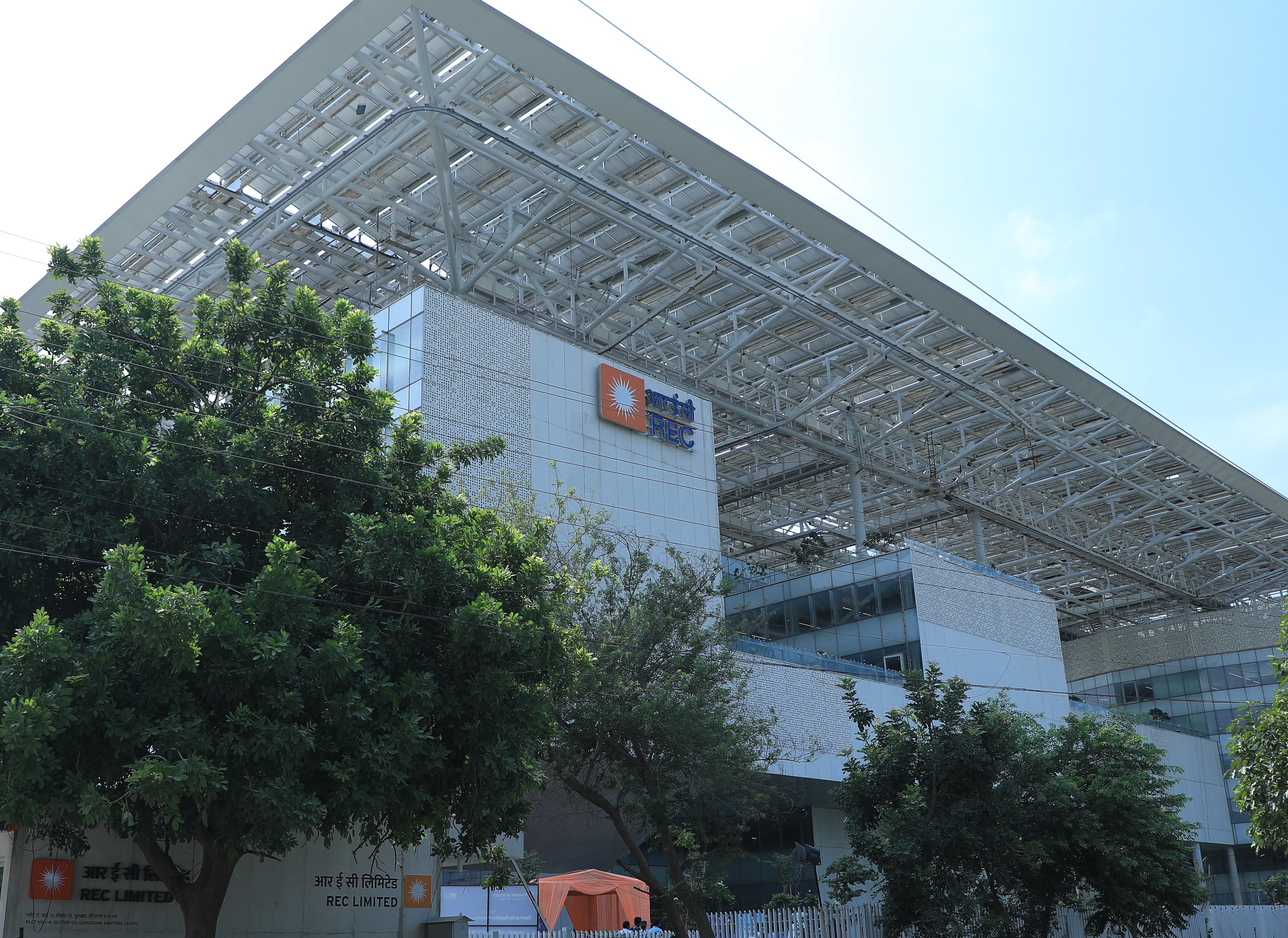
REC Limited, a Maharatna Central Public Sector Enterprise under the Ministry of Power, Government of India, has successfully completed post-issuance assurance for its Green Bonds worth USD 500 million (ECB 74) issued in September 2024 and JPY 61.10 billion (ECB 66) issued in January 2024 — under its Green Finance Framework.
The independent verification, conducted in accordance with the International Capital Market Association (ICMA)’s Green Bond Principles confirmed that the entire net proceeds from both the issuances have been fully allocated to eligible projects consistent with REC’s Green Finance Framework.
A New Benchmark for Transparent Climate Impact
REC’s inaugural Green Bond Impact Report (FY 2025) reflects a maturing green-finance ecosystem where accountability is as important as ambition. Developed through close technical collaboration and international benchmarking, including expert support from the Global Green Growth Institute (GGGI), the report builds on GGGI’s earlier role in reaffirming REC’s Green Finance Framework as part of the Second Party Opinion (SPO) process ahead of the issuances.
This continued collaboration supported REC in aligning its post-issuance assurance process and impact report with evolving ICMA standards and global best practices. The report introduces a dual approach to measuring renewable energy and climate benefits — distinguishing between financed impact, representing REC’s proportional contribution based on its financed share of total project cost, and enabled impact, capturing the additional generation and abatement achieved beyond REC’s financed share.
During FY 2025, the portfolio of 11 operational projects delivered 0.87 million tCO₂ of financed reductions and 1.34 million tCO₂ of enabled reductions, supported by approximately 1 billion kWh of financed renewable generation across 2,032 MW of total installed capacity. By disclosing both, REC strengthens transparency on how its financing influences decarbonization outcomes — a step aligned with evolving global investor expectations. Avoided emissions are calculated using India’s official Combined Margin emission factor of 0.861 tCO₂/MWh for all grid-connected projects. One exception is a 7 MW solar project, which follows small-scale CDM guidance and uses the import-adjusted weighted average emission factor (0.727 tCO₂/MWh) instead. This ensures the calculations follow the most appropriate method for each project type.
REC’s internal data-controls framework ensures impact attribution remains transparent and verifiable. Foreclosed projects are excluded from impact attribution, while under-construction assets record zero impact until commissioning. These safeguards, combined with independent verification aligned with ICMA’s Green Bond Principles, reinforce the integrity of REC’s reporting system and ensure audit readiness.
Extending India’s Clean Energy Footprint Across States
REC’s green bond portfolio spans India’s clean-energy heartlands, with projects distributed across multiple states and technologies. On a combined (financed and enabled) basis, Rajasthan accounted for 70.9 % of total emission reductions, followed by Gujarat (16 %), Karnataka (5.1 %), and Bihar (3.6 %), with additional contributions from Andhra Pradesh, Uttar Pradesh, Haryana, and Maharashtra.
The portfolio (including under construction projects) reflects balanced diversification — spanning renewable energy, biogas, pumped storage, and low carbon mobility (e-buses and Mumbai Metro) — ensuring both resilience and scale in India’s energy transition.
“This post-issuance assurance reinforces REC’s commitment to sustainable finance and climate accountability, not just for access to energy but for enabling green jobs and market transformations”, shared Shri Harsh Baweja , Director (Finance), REC Ltd.
“GGGI will continue to leverage its global expertise to support more partners like REC Ltd. in catalyzing the billions needed for India’s green transition”, highlighted Shri Soumya Garnaik, India Country Representative, GGGI.

Copyright © 2017 Indian Grapevine a unit of Integrated Media Enterprises