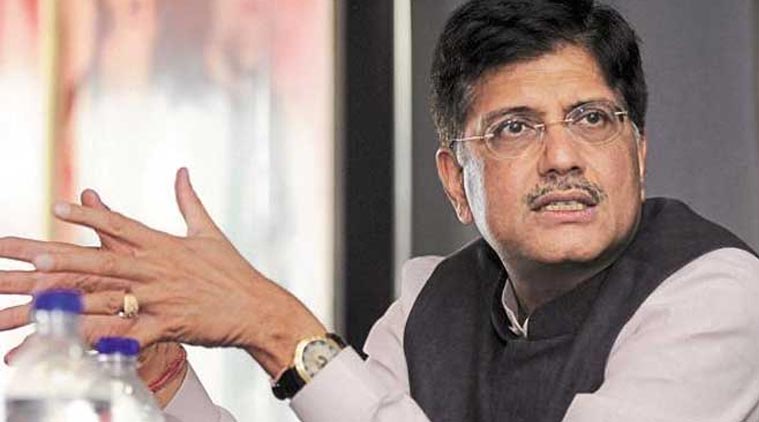
Piyush Goyal undertook an official visit to Liechtenstein on 7 January 2026. During the visit, the Minister paid a courtesy call on H.S.H. Hereditary Prince Alois von und zu Liechtenstein at Vaduz Castle, called on H.E. Ms Brigitte Haas, Prime Minister, held a meeting with H.E. Ms Sabine Monauni, Deputy Prime Minister and Minister of Foreign Affairs, Environment and Culture, participated in an interview with ORF, attended a luncheon hosted by the Deputy Prime Minister; visited Hilti AG for an interaction with its leadership.
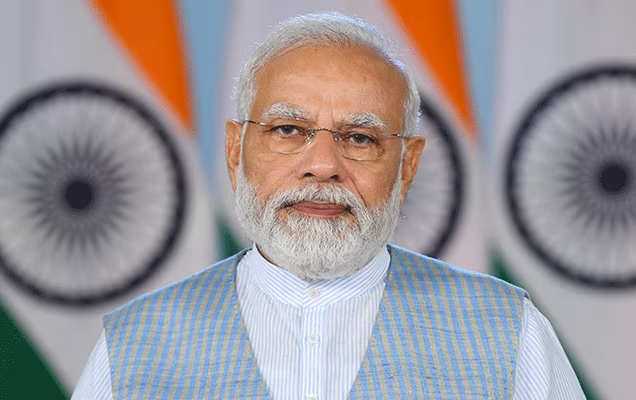
The first ministerial visit of 2026 reflects India’s commitment to accelerate the implementation of the India–EFTA Trade and Economic Partnership Agreement (TEPA) and translate it into sustained trade, investment, and manufacturing partnerships. The Minister also recalled the Prime Minister Shri Narendra Modi’s emphasis on India’s constructive role and optimism in the global economy. Prime Minister Modi has said: “The world is seeing India with a ray of hope amidst uncertainty” The Minister noted that this sentiment resonates with India’s approach to partnerships that create real outcomes for businesses, MSMEs, farmers, fishermen and communities.
TEPA is India’s first free trade agreement with a developed group of EFTA countries (Iceland, Liechtenstein, Norway, and Switzerland). It signals the improving quality of Indian products, the expanding and diversified range of Indian exports, and a steady strengthening of India’s manufacturing capabilities that support “Make in India” and “Make for the World”.
The Minister underlined that TEPA represents a shift to a higher-quality economic relationship. India’s manufacturing ecosystem is increasingly combining scale, competitiveness, and reliability for global markets.
In meetings with the Liechtenstein leadership and business community, the Minister set out India’s growth story as a stable and scalable base for long-term partnership. India is today the fourth largest economy, with an estimated GDP of USD 4.13 trillion in 2025. India offers both scale and reform momentum, a large and expanding consumer market, a deepening industrial base, and a sustained focus on ease of doing business, digitisation, and infrastructure-led competitiveness.
Both sides also exchanged views on the global business environment. With supply chains facing disruptions, uncertainties, and sharper volatility, India and Liechtenstein can combine strengths to offer stability and predictability to investors and enterprises. India’s scale, talent, and manufacturing depth can complement Liechtenstein’s specialised industrial capabilities, high-value innovation, and financial expertise. Together, these can create resilient value chains and a reliable investment bridge, sending a signal of confidence and hope in an increasingly unsettled world.
At Hilti AG, the Minister encouraged stronger industry-to-industry partnerships, higher value addition, supplier linkages including MSMEs, and an expanded role for India-based production in global operations. He invited Liechtenstein companies to use TEPA as a platform to grow their India presence, build manufacturing and innovation partnerships, and participate in India’s expanding opportunities across sectors.
The visit concluded with a call to intensify India–Liechtenstein and wider India–EFTA engagement in the months ahead. The Minister encouraged greater participation of EFTA companies in key trade and investment events in India and invited closer collaboration through business dialogues and delegations. TEPA carries an agreed ambition to facilitate USD 100 billion in investments into India and support the creation of one million direct jobs. The EFTA’s market access offer under TEPA covers 100% of non-agri products and tariff concession on Processed Agricultural Products (PAP). Sensitivity related to PLI in sectors such as pharma, medical devices & processed food etc. have been taken while extending offers. India’s offer to EFTA covers 82.7% of tariff lines, accounting for 95.3% of EFTA exports. Over 80% of these imports are Gold, with no change in effective duty on Gold. Sensitive sectors protected, including pharma, medical devices, processed food, dairy, soya, coal, and sensitive agricultural products. India looks forward to welcoming more Liechtenstein and EFTA enterprises to India, translating TEPA into stronger investments, deeper technology partnerships, and a larger Indian footprint in global trade and investment flows.

Copyright © 2017 Indian Grapevine a unit of Integrated Media Enterprises