


Krishi Vigyan Kendras Set for Shift Towards Research, Incubation and Farmer Skills
Proposed KVK reforms would shift the network from conventional agricultural extension towards applied research, farmer skills, incubation and tech transfer.

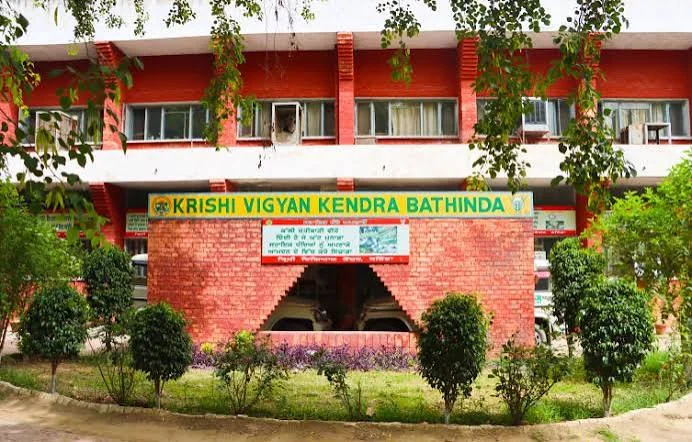
The reforms proposed for Krishi Vigyan Kendras would move the network away from conventional agricultural extension towards applied research, farmer skill training, incubation of agricultural enterprises and the transfer of technology to the field.
Krishi Vigyan Kendras are district-level farm science centres set up under the Indian Council of Agricultural Research. The network covers more than 730 districts and is hosted by state agricultural universities, ICAR institutes, non-governmental organisations and state departments. Each centre carries a multidisciplinary team of subject matter specialists covering agronomy, horticulture, plant protection, animal science and home science, and runs demonstrations on farmers' fields, on-farm testing of technologies and training programmes. Each centre is required to maintain an instructional farm where technologies are demonstrated under local conditions, and many run seed production, planting material nurseries and soil and water testing laboratories. The centres also serve as the delivery point for advisories issued under the agromet services run with the India Meteorological Department.
The conventional extension model has the centre demonstrating a recommended package of practices and the farmer adopting it. Reviews of the system have pointed to limited reach relative to the number of farmers in a district, a focus on demonstration plots rather than on measurable change in yields across the district, and weak linkage with the research institutions generating new varieties and practices. The proposed shift would make the centres a point where technology developed in laboratories is tested, adapted to local conditions and taken to production. The number of farmers a district contains runs into lakhs in the larger states, against a centre staffed with six to eight specialists. Extension therefore works through selected contact farmers and through the state agriculture department's own field staff, and the quality of that second link determines how far a demonstration travels.
The centres currently report to ICAR through eleven Agricultural Technology Application Research Institutes, which coordinate their programmes and monitor performance. Funding comes through ICAR, with the host institution providing land and infrastructure. The scheme has been evaluated by NITI Aayog and by parliamentary committees, both of which have commented on the variation in performance between centres.
Placing incubation and entrepreneurship within the centres' remit would connect them to the agri-startup programmes the Centre runs, including the Rashtriya Krishi Vikas Yojana start-up component and the agri business incubators established at agricultural universities. It would also change what the centres are measured on, from the number of demonstrations and trainings conducted to the enterprises supported and the technologies commercialised. The Centre has separately been supporting agricultural start-ups through the agriculture infrastructure fund, the production linked incentive scheme for food processing, and the network of agri business incubators. Bringing the district centres into that chain would give start-ups a field testing site and a farmer interface they otherwise have to build themselves.
The change requires the centres to carry staff with skills they were not recruited for, including business development and market linkage, and to build relationships with input companies, food processors and financiers. Several centres already run soil testing laboratories, seed production units and custom hiring centres for farm machinery, which gives them a base of revenue-generating activity to build on. The state agricultural universities hosting most centres would carry much of the responsibility for the transition. Farmer producer organisations, of which the Centre has been supporting the formation of ten thousand under a central scheme, would be the natural counterpart for a centre working on enterprise development. These organisations aggregate produce, buy inputs and, in some cases, run processing units, and they require the technical support the centres are positioned to provide.
The Krishi Vigyan Kendra network operates under the Indian Council of Agricultural Research and covers more than 730 districts across the country.