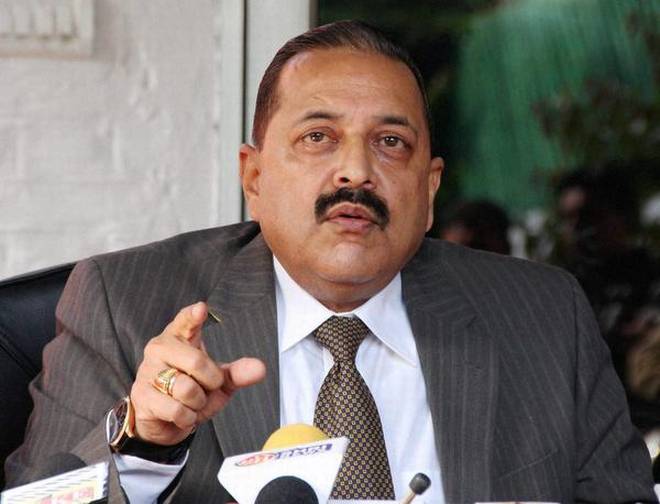
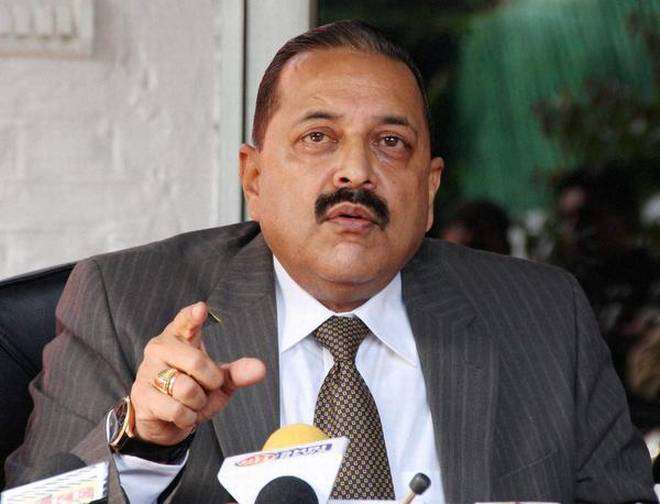
Dr Jitendra Singh today highlighted India’s ambitious roadmap for the next decade, stating that by 2027 India will achieve a rare global milestone by undertaking simultaneous human missions in outer space and the deep sea, reflecting the country’s integrated and forward-looking scientific vision.
Speaking at a media conclave, Dr. Jitendra Singh said that India’s scientific journey towards Viksit Bharat@2047 is being shaped by confidence, capability, and clarity of purpose. He said that as India approaches the centenary of its Independence in 2047, the world will keenly observe not only what India has achieved, but also the values, systems, and pathways through which the nation has progressed.
India’s enduring democracy, constitutional strength and civilisational continuity, he said, remain among its greatest achievements and form the foundation for future growth, said the Minister.
Highlighting India’s expanding frontiers of exploration, the Minister said the country is now moving decisively beyond traditional domains into previously underexplored sectors such as space and deep ocean research. He revealed that as early as 2026, India plans to conduct a manned deep-sea mission reaching a depth of 500 metres, marking a significant step under the Deep Ocean Mission. This will pave the way for deeper dives in the coming years, ultimately enabling India to explore depths of up to 6,000 metres using the indigenous submersible MATSYA.
Dr Jitendra Singh emphasised that 2027 will be a defining year, when India is expected to send Indian astronauts into space while simultaneously conducting a deep-sea human exploration mission, an achievement accomplished by only a handful of nations globally. He described this dual mission as symbolic of India’s scientific maturity and its ability to pursue complex, parallel explorations in an integrated manner.
In the space sector, the Minister said the transformative impact of reforms introduced over the past decade, particularly the opening-up of space activities to private participation. He noted that India has moved from being constrained by self-imposed regulations to becoming a confident space-faring nation with a rapidly expanding ecosystem. Today, India hosts hundreds of space start-ups and entrepreneurs, and the space economy is projected to grow multi-fold in the coming years, emerging as a key contributor to national growth and global collaboration.
Dr Jitendra Singh also drew attention to India’s unique natural, cultural and civilisational assets, stating that the country’s development model is rooted in value addition to its legacy resources—be it the Himalayas, oceans, traditional knowledge systems, or biodiversity. He said that Prime Minister Narendra Modi’s vision of combining Virasat (heritage) with Vikas (development) has enabled India to pursue growth that is sustainable, inclusive, and globally relevant.
Referring to the Deep Ocean Mission, the Minister said India’s vast coastline of over 11,000 kilometres and its rich marine resources, ranging from critical minerals and fisheries to medicinal and biological wealth—had remained underutilised for decades. The Mission, he said, is a strategic initiative to unlock this potential while strengthening India’s role in the global blue economy. He noted that the Prime Minister has personally highlighted the importance of deep ocean exploration in successive Independence Day addresses, underscoring its national priority.
Dr Jitendra Singh further stated that India is no longer merely following global trends but is increasingly charting new pathways for others to follow. Whether in space science, biotechnology, deep-sea research or integrated innovation, India is positioning itself as a role model for development that balances technological advancement with ethical and societal responsibility.
Concluding his address, the Minister said that India’s journey towards 2047 will be defined not just by economic milestones, but by the confidence to explore the unknown, the courage to reform, and the capacity to contribute meaningfully to global progress. “India’s missions, on land, in the ocean depths, and in space, are ultimately missions for humanity,” he said.

Copyright © 2017 Indian Grapevine a unit of Integrated Media Enterprises