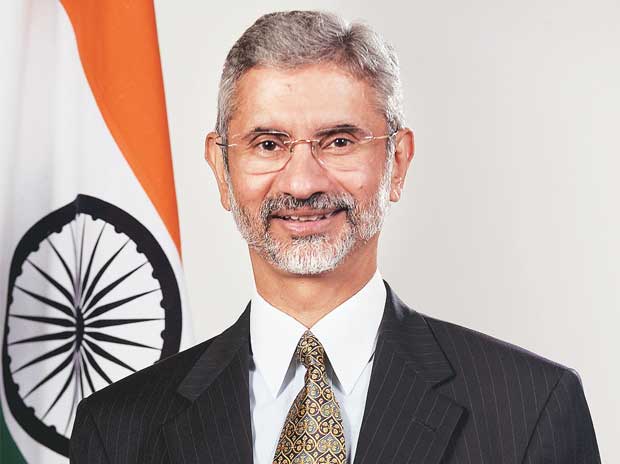
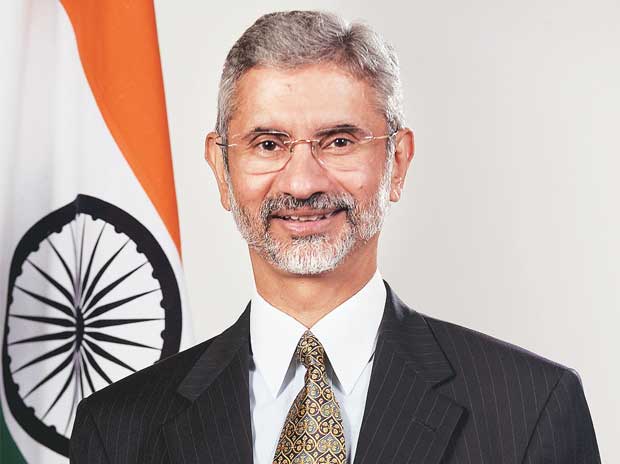
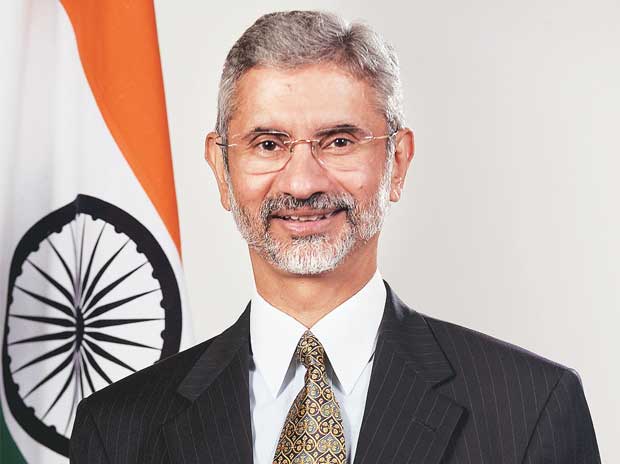
Dr Jitendra Singh today said that the next major global revolution will be bio-driven, and that India is uniquely positioned to lead this transformation on the strength of its deep-tech capabilities, robust startup ecosystem and rising domestic institutional capital.
In an exclusive "FireChat" session organised by the "Indian Venture and Alternate Capital Association" (IVCA) in New Delhi, Dr Jitendra Singh described the recently announced ₹1 lakh crore Research, Development, and Innovation (RDI) Fund as “one of the most unique and forward-looking initiatives taken by the Government” to support high-risk, high-reward research in frontier technologies, and to catalyse a new era of partnership between Government, industry and investors. He said the Fund has been designed with a liberal and long-term mindset, with low-interest, patient capital and risk-sharing features that send a clear signal of the Government’s intent to crowd-in private investment rather than crowd it out.
The Minister highlighted that India is rapidly emerging as a deep-tech and science-led innovation power, backed by strong political will at the highest level. He said that, unlike in the past when India often lagged by a decade or more in adopting new technologies, the country is now among the first to frame dedicated biotechnology policies and to open strategic sectors such as space and atomic energy to private participation. He credited the leadership and vision Prime Minister Shri Narendra Modi for breaking long-standing taboos and bringing science, technology, and innovation to the centre of the national development agenda.
Elaborating on the structural change underway in India’s innovation landscape, Dr Jitendra Singh said that the last decade was defined by the digital revolution in areas such as IT, fintech, e-commerce and software, but the coming decade will be led by deep-tech India across sectors like space, bio-manufacturing, green hydrogen, quantum technologies, and advanced materials. He noted that these sectors are science-intensive, capital-intensive, and IP-intensive, and therefore demand a very different kind of risk-tolerant, patient capital than traditional manufacturing or infrastructure.
Dr Jitendra Singh pointed out that the global success stories of advanced economies have been written through the active participation of the private sector, philanthropic investors, and domestic institutional capital. For many years, he observed, India’s mindset was to look up to the Government for everything, and even in sunrise sectors like space or nuclear, the private sector did not anticipate the scale or speed at which reforms would be undertaken. “Even the private sector was not prepared for the kind of proactive, liberal and decisive approach that this Government has brought in sectors like space, nuclear and biotechnology,” he said, adding that the RDI Fund is also intended to help the private sector overcome legacy hesitation and step into frontier areas with confidence.
Referring to India’s fast-growing startup ecosystem, the Minister emphasised that innovation is no longer confined to the big metros. He informed that out of nearly 1.75–2 lakh startups that now place India as the world’s third-largest startup ecosystem, around 60,000 belong to Tier-2 and Tier-3 towns. Calling it a myth that cutting-edge innovation happens only in Bengaluru, Mumbai, or Hyderabad, he said that many of the most determined and aspirational founders are emerging from small towns and government schools, driven by a strong desire to prove themselves and create value.
Sharing his interactions with young innovators in aspirational districts, Dr Jitendra Singh said that the aspiration and awareness levels among students in remote areas are now often higher than those in big cities, thanks to digital connectivity and focused schemes like Vigyan Jyoti. He cited the example of a schoolgirl from an aspirational district who was well-versed with national science schemes and was already demanding that eligibility be expanded to younger classes. “This illustrates how deeply the ecosystem has penetrated, and how the next generation is growing up with a completely different mindset,” he remarked.
The Minister said that, in addition to deep-tech, India has unique strengths in sectors such as the Himalayan ecosystem, the coastal and blue economy, agriculture, aroma and natural products, where thousands of successful startups have been built by founders who are sometimes not even graduates but possess passion, aptitude and an instinct for value creation. He highlighted the Aroma Mission as an example of how science-based interventions can create thousands of rural entrepreneurs, generate export-quality products, and attract international competition.
Dr Jitendra Singh stressed that India today stands at an inflection point, transitioning from being merely a fast-growing major economy to becoming a science-led, innovation-driven global leader. He said that India’s ambition to become a Viksit Bharat by 2047 requires technological strength, economic resilience, and financial self-reliance, for which domestic institutional investors such as pension funds, insurance companies, banks, sovereign-linked entities and family offices will play a critical role. He welcomed the growing participation of domestic Alternate Investment Funds (AIFs) and noted that India today hosts nearly 1,700 registered AIFs with commitments of over ₹15 lakh crore, reflecting deepening capital markets and investor confidence.
Describing the RDI Fund as a cornerstone of this new architecture, the Minister said it will support frontier R&D in areas such as AI, semiconductors, clean energy, biotech, advanced materials, defence-tech, and space-tech, and help India “invent in India, not just Make in India”. He underlined that the Fund is designed to strengthen the entire innovation pipeline from discovery to deployment, and to bring together industry, academia, startups, investors, and public institutions in a unified national innovation framework.
Dr Jitendra Singh also highlighted the complementary role of institutions such as the Anusandhan National Research Foundation (ANRF), sectoral interfaces like IN-SPACe in space and BIRAC in biotechnology, and industry bodies like IVCA. He said these platforms serve as scientific and financial interfaces to structure collaborations, determine optimal partnership models and match investors to appropriate opportunities, avoiding ad-hoc or random engagement and ensuring that each player fits into the most suitable slot within the ecosystem.
Responding to suggestions from fund managers during an interactive conversation, the Minister acknowledged the importance of crowding-in corporate and philanthropic capital for earlier-stage research, including work at lower Technology Readiness Levels. He noted that international philanthropic investments have already begun flowing into India’s science and innovation ecosystem in significant volumes and said this is creating positive examples for domestic philanthropists and corporates to emulate. He emphasised that the Government envisages a “wholesome combination of collaboration” spanning Government, private sector, corporates, philanthropists, and NGOs rather than limiting the innovation partnership to any single segment.

Copyright © 2017 Indian Grapevine a unit of Integrated Media Enterprises