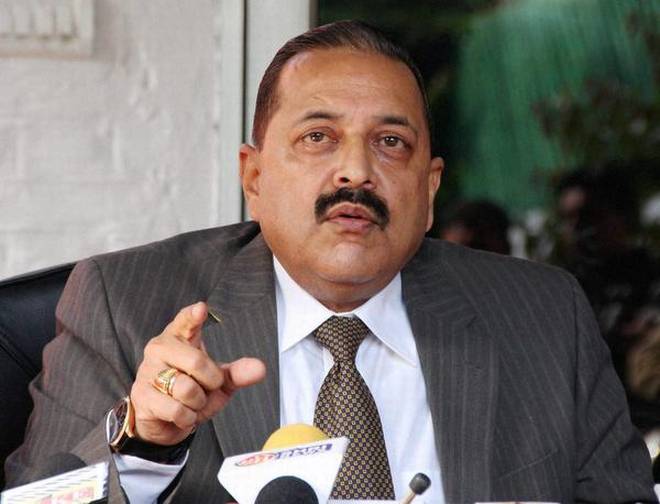
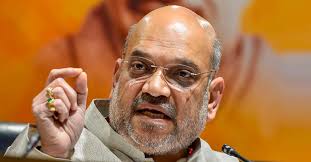
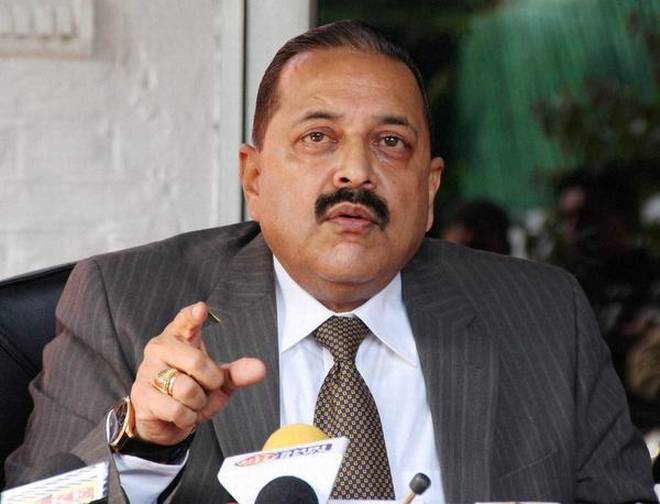
Energy independence is no longer a matter of choice but an economic, strategic, and geopolitical necessity, said Union Minister of State (Independent Charge) for Science & Technology and Earth Sciences Dr. Jitendra Singh, while adding that India’s transition towards clean and diversified energy sources is inseparably aligned with self-reliance and geopolitical compatibility, the vision of Aatmanirbhar Bharat and India’s expanding global role.
Addressing an event in Delhi, the Minister said that debates on whether to adopt green and clean energy have become redundant, as the global consensus today recognises energy transition as essential for sustainable growth, economic resilience, and geopolitical compatibility. “If India has to move forward, there is simply no alternative,” he said.
Dr. Jitendra Singh said that reducing dependence on fossil fuel imports not only strengthens self-reliance but also prepares India for an inevitable global shift, as traditional energy exporters themselves are rapidly diversifying their energy portfolios. “Persisting with outdated energy models is like clinging to obsolete technology out of sentiment, tomorrow, even spare parts will not be available,” he remarked.
Highlighting India’s growing stature on the global stage, the Minister said the country is no longer a passive participant but a trendsetter in areas such as climate action, clean energy, and advanced technology. “India is no longer following global cues; today, other nations are looking towards India for direction,” he said, citing examples from space exploration and biotechnology where Indian innovation is benefiting the global community.
Referring to India’s clean energy commitments, Dr. Jitendra Singh recalled that Prime Minister Narendra Modi announced India’s Net Zero target for 2070 and reiterated the government’s resolve to achieve 100 GW of nuclear energy capacity by 2047. He clarified that different energy sources should not be viewed through the prism of discrimination but through suitability, reliability, and application-specific utility.
The Minister emphasized that while renewable energy will form a significant share of India’s energy mix, certain sectors—such as data centres, artificial intelligence, and advanced computing, require uninterrupted, stable, 24x7 power, where nuclear energy plays a critical role. “The future lies in a hybrid energy model, where each source is deployed where it is most cost-effective and efficient,” he said.
Drawing parallels from technological evolution, Dr. Jitendra Singh observed that just as Artificial Intelligence is now evolving into a balanced ‘AI plus Human Intelligence’ model, India’s energy strategy too will mature into an integrated framework combining renewables, nuclear power, hydrogen, and other emerging solutions.
He also highlighted the government’s bold and unconventional reforms, including opening strategic sectors such as nuclear energy and space to private participation. “This government has demonstrated the courage to move beyond the status quo, enabling public-private synergy that is essential for achieving scale, speed and sustainability,” he said.
Calling for greater collaboration and trust between the public and private sectors, the Minister said India must move beyond silos and mutual scepticism to build a healthy ecosystem of innovation and execution. “National progress demands collective responsibility, shared purpose and integrated action,” he asserted.
Dr. Jitendra Singh concluded by stating that while the initial phase of energy transition presents challenges, India is firmly on the right path under the leadership of Prime Minister Narendra Modi. “Clean energy is no longer a subject of seminars alone; it is becoming a way of life. As stakeholders, we will adapt, innovate, and lead,” he said.

Copyright © 2017 Indian Grapevine a unit of Integrated Media Enterprises