


Dr Jitendra Singh Says RISE Conclave Puts Spotlight on India’s Tier-2 and Tier-3 Startup Powerhouse
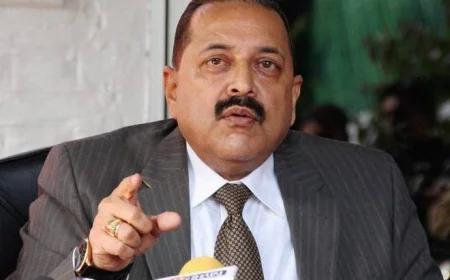
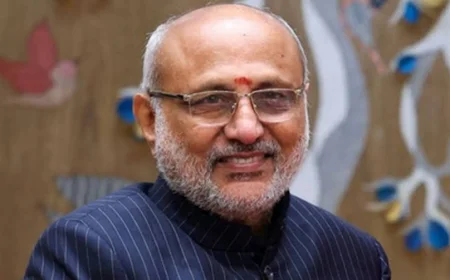
Dr Jitendra Singh yesterday called for taking India’s rapidly expanding startup ecosystem beyond metropolitan centres and creating stronger linkages between science, startups and industry to accelerate the journey of indigenous technologies from laboratories to the marketplace.

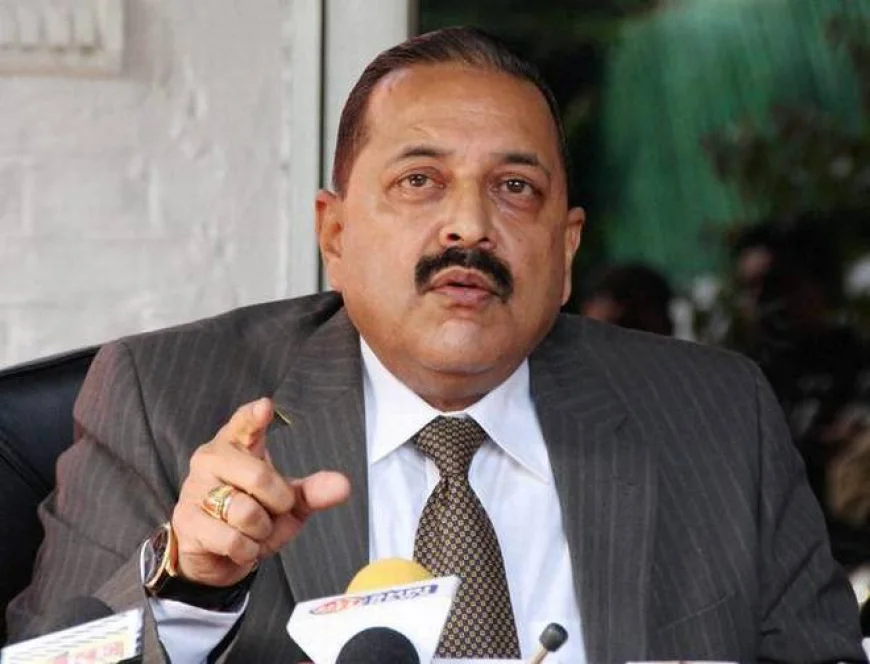
Dr Jitendra Singh yesterday called for taking India’s rapidly expanding startup ecosystem beyond metropolitan centres and creating stronger linkages between science, startups and industry to accelerate the journey of indigenous technologies from laboratories to the marketplace.
Addressing the inaugural session of the 6th RISE Conclave 2026 in Kolkata, Dr Jitendra Singh said there is a growing need to recognise the innovation potential of Tier-2 and Tier-3 cities, noting that more than 50–60 per cent of India’s startups do not belong to metros. Young innovators from smaller cities are increasingly matching and, in several cases, excelling their counterparts in bigger cities, he said, making it important for scientific institutions and the innovation ecosystem to reach out to them rather than expecting them to travel to established technology hubs.
The Minister said the RISE Conclave provides precisely such a platform by bringing startups, industry representatives, potential mentors, researchers and government representatives under one roof. He said this convergence is essential for ensuring that scientific research is not confined to laboratories but moves towards entrepreneurship, technology transfer, commercialisation and wider societal application.
Dr Jitendra Singh said Kolkata’s selection as the venue for the RISE Conclave carries a special significance because of the city’s historic contribution to India’s scientific and academic journey. Recalling Bengal’s long tradition of scientific excellence and institution-building, he said Kolkata has produced and nurtured eminent personalities and institutions that have contributed significantly to India’s intellectual and scientific progress.
Referring to the legacy of Dr Bidhan Chandra Roy, Prof. U. N. Brahmachari, Sir C. V. Raman and Dr Syama Prasad Mukherjee, among others, Dr Jitendra Singh said the present generation has the responsibility to live up to this extraordinary legacy and help restore Kolkata’s position as a major centre of scientific and technological excellence. He said the city’s intellectual strength and academic aptitude provide a strong foundation for connecting its historic scientific heritage with frontier technologies and entrepreneurship.
Dr Jitendra Singh said the Government’s Whole-of-Government approach is increasingly translating into a Whole-of-Science approach, bringing different ministries, departments, research institutions, academia and industry together. He said the convergence of CSIR laboratories with institutions such as IIT Kharagpur, IISER Kolkata, NIT Durgapur and Atal Tinkering Labs, along with networks under the Department of Biotechnology, Department of Science and Technology, Department of Atomic Energy and Ministry of Earth Sciences, can create a strong knowledge corridor in eastern India.
The Minister said India has in recent years created new opportunities for private-sector participation in areas that were earlier largely closed to industry, including space, nuclear energy and biotechnology. The opening up of these sectors, he said, has created a new environment for startups and businesses to participate in national technology development.
Dr Jitendra Singh also referred to the Government’s decision to establish a ₹1 lakh crore Research, Development and Innovation (RDI) Fund, as well as the role of the AnusandhanNational Research Foundation (ANRF), in encouraging high-risk, high-reward research and stronger partnerships among academia, startups and industry.
The Minister urged industry to come forward to adopt, support, finance and commercialise indigenous technologies emerging from Indian laboratories. He said scientific projects and startups cannot be sustained in isolation and require a mutually beneficial relationship with business and industry. For technologies to reach the market at scale, he added, industry must see clear commercial value and become an active partner in the innovation process.
Dr Jitendra Singh also stressed that the outcomes of RISE Conclave should become part of a larger and continuous innovation ecosystem, rather than remaining confined to a single event. He called for taking the knowledge, technologies and opportunities emerging from such platforms to wider sections of society through communication in languages and formats that people understand and access, enabling the learnings of one RISE edition to feed into the next.