


Rajasthan Chief Secretary Srinivas Praises Five Young District Collectors
Rajasthan Chief Secretary V Srinivas commends five young district collectors for their work during a Secretariat meeting, calling them out on LinkedIn.

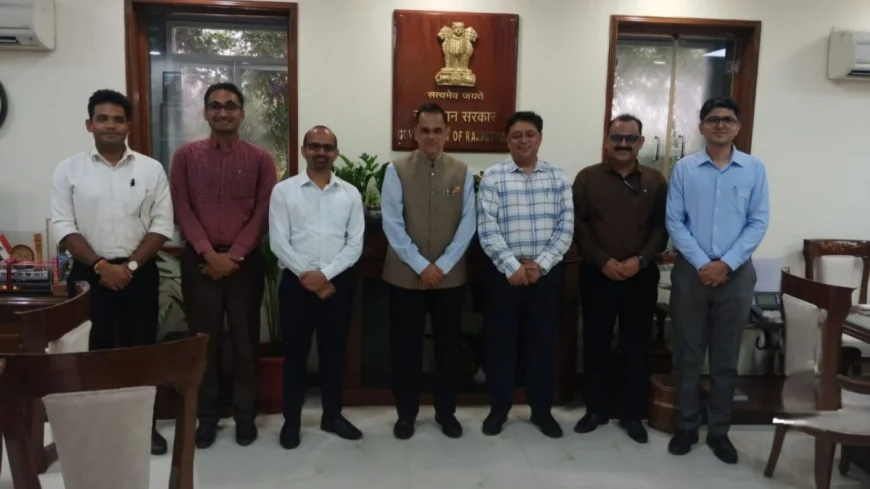
Rajasthan Chief Secretary V Srinivas has commended five young district collectors for their work, praising them during a meeting at the state Secretariat and later highlighting their contributions publicly.
The Chief Secretary is the seniormost bureaucrat in a state, heading the civil service hierarchy and coordinating implementation across departments. Public commendation from this office, particularly one shared on a professional networking platform, carries weight within the cadre because it signals which officers the state's top administrative leadership views favourably, often influencing future postings and empanelment prospects within the state government. The practice of the Chief Secretary publicly recognising district-level performance has become more common across states in recent years, as senior bureaucrats increasingly use professional networking platforms to communicate directly with both the public and the wider civil service on administrative priorities.
Srinivas, sharing his assessment on LinkedIn, named the five as Jodhpur Collector Alok Ranjan, Sawai Madhopur Collector Kanaram Jat, Karauli Collector Akshay Godara, Udaipur Collector Gaurav Agarwal, and Rajsamand Collector Arun Hasija, describing them as outstanding administrators. He credited General Administration Department Principal Secretary Naveen Jain alongside them for facilitating the interaction.
District collectors in Rajasthan hold responsibility over some of the state's largest and most administratively demanding districts. Jodhpur and Udaipur are major urban and tourism centres requiring coordination across municipal bodies, heritage conservation, and law enforcement, while Sawai Madhopur, home to Ranthambore National Park, and Karauli carry additional wildlife and forest-boundary administration responsibilities layered onto standard revenue and welfare duties.
The meeting comes at a point when the state government has been pushing districts to accelerate implementation of central and state welfare schemes ahead of the upcoming financial year review cycle. Collectors are typically evaluated on metrics including scheme saturation rates, grievance redressal turnaround, and law and order indicators, and public praise of this kind often follows strong performance on one or more of these fronts.
The Chief Secretary's gesture reflects a broader pattern of senior IAS officers using public commendation as an informal performance-management tool, supplementing the formal Annual Confidential Report process that governs promotions and empanelment. For officers still several years from Secretary-level postings, this kind of recognition from the Chief Secretary's office can shape how their record is read at the next Departmental Promotion Committee review.
Young collectors in Rajasthan typically manage districts with populations running into the millions, overseeing everything from land dispute resolution and mining lease enforcement to disaster response during the state's frequent heatwave and drought conditions. The five collectors named span districts with very different administrative profiles, from the industrial and heritage-tourism pressures of Jodhpur to the wildlife-corridor management demands unique to Sawai Madhopur, a range that reflects the varied challenges young IAS officers are expected to handle within their first collectorship postings.
Rajasthan's Chief Secretariat has periodically institutionalised such recognition through review meetings where district-level performance indicators are discussed directly with the state's top bureaucrat, a practice that gives younger officers rare face-time with the Chief Secretary outside the usual chain of Divisional Commissioners and Principal Secretaries. For collectors managing districts bordering forest and wildlife zones, coordination with the Rajasthan Forest Department on man-animal conflict and tourism-linked infrastructure adds an additional layer of responsibility beyond the standard revenue and law-and-order mandate most district collectors carry.
Srinivas's post did not specify individual achievements for each collector, framing the recognition instead as a collective endorsement of the five officers' administrative dedication following the Secretariat interaction.