


Madhya Pradesh Strengthens Medical Education Infrastructure; MBBS Seats Increased to 6,120
JP Nadda met Madhya Pradesh Chief Minister Shri Mohan Yadav to review the progress of the health sector in the State, with discussions focusing on healthcare infrastructure, medical education, specialised services and key public health initiatives.

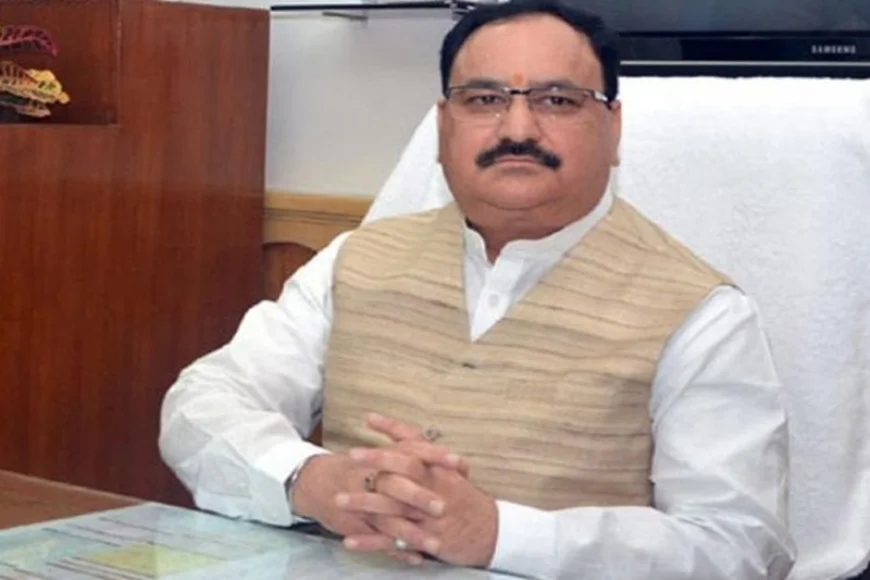
JP Nadda met Madhya Pradesh Chief Minister Shri Mohan Yadav to review the progress of the health sector in the State, with discussions focusing on healthcare infrastructure, medical education, specialised services and key public health initiatives.
During the meeting, Shri Nadda appreciated the Madhya Pradesh Government for its sustained efforts to strengthen the State’s healthcare ecosystem and expand access to quality healthcare. He particularly commended the State for leveraging the Public-Private Partnership (PPP) model to accelerate the expansion of medical education and healthcare infrastructure.
A key focus of the review was the expansion of medical education in the State. Madhya Pradesh has increased its MBBS seats from 5,600 to 6,120 in 2026, adding 520 seats in a year. The State has also expanded super-speciality education, with seats in government medical colleges increasing from 63 to 73, and in private medical colleges from 29 to 53.
Shri Nadda appreciated these efforts, emphasising that expansion of medical education and specialist capacity will strengthen the healthcare workforce and improve the availability of advanced healthcare services across the State.
The Union Health Minister also lauded Madhya Pradesh for its innovative use of the PPP model for establishing medical colleges. Under the initiative, medical colleges are being established in Dhar, Panna, Katni and Betul, with the institutions targeted for establishment by December 2027. The initiative represents an important step towards expanding medical education and bringing specialised healthcare services closer to people across different regions of the State.
Shri Nadda appreciated the State Government’s approach of combining public investment with private-sector participation to augment healthcare capacity and accelerate infrastructure development.
The meeting also reviewed improvements in key maternal and child health indicators. As per SRS 2022–24, Madhya Pradesh’s Maternal Mortality Ratio (MMR) declined by 7 points to 135 per lakh live births. The proportion of pregnant women receiving four or more ANC visits increased from 57.5% to 69.5%, as per NFHS-6. Child health indicators have also shown improvement, with the Neonatal Mortality Rate declining from 27 to 26 and the Infant Mortality Rate from 37 to 35 per 1,000 live births.
The State has also strengthened access to specialised healthcare. 70 haemodialysis units are operational across 52 districts, while 52 cancer day-care centres are providing cancer treatment services. Advanced cancer treatment facilities, including CAR-T cell therapy, have also been introduced at Government Mahatma Gandhi Memorial Medical College, Indore.