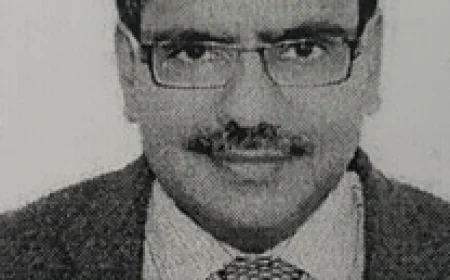



Justice Rohit Kapoor Recommended as Permanent Judge of Punjab and Haryana High Court
The Supreme Court Collegium recommends Justice Rohit Kapoor for confirmation as a Permanent Judge of the Punjab and Haryana High Court.


The Supreme Court Collegium has recommended Justice Rohit Kapoor, currently an Additional Judge, for appointment as a Permanent Judge of the Punjab and Haryana High Court, according to a resolution issued this week.
The Punjab and Haryana High Court, seated in Chandigarh, has unusual jurisdiction covering two states and a Union Territory, giving its bench a caseload that spans everything from Punjab's agricultural land disputes to Haryana's fast-urbanising commercial litigation and Chandigarh's municipal matters, a spread of subject matter that few other high courts in the country have to handle from a single seat. Its sanctioned strength stands at 85 judges, among the highest in the country, reflecting the combined litigation volume of the two states and the Union Territory it serves.
Justice Kapoor's confirmation follows the same review process used across high courts, in which the Collegium examines an Additional Judge's judgments and bench conduct across one or more terms before recommending permanent status, a step that ends the periodic renewal cycle Additional Judges are otherwise subject to and gives the judge settled tenure going into the remainder of his career on the bench.
Punjab and Haryana High Court has repeatedly flagged pendency pressure given the volume of litigation from three jurisdictions funnelling through a single bench, and permanent confirmations there are treated as important for maintaining working strength rather than losing sitting judges to term-renewal delays that can otherwise stretch on for months while a file awaits Collegium review.
Once notified, Justice Kapoor will hold office as a Permanent Judge until the retirement age of 62, providing settled tenure rather than the fixed-term status that governs Additional Judges, whose continuation depends on periodic Collegium and government action at intervals of roughly one to two years.
The recommendation now moves to the Union Law Ministry for the standard vetting process before formal notification by the President under Article 217 of the Constitution, a stage that typically proceeds more quickly for confirmations of sitting judges than for fresh elevations from the bar or judicial service.
High courts with multi-jurisdiction mandates like Punjab and Haryana's tend to place a premium on judges who have already demonstrated familiarity with the specific statutory frameworks unique to each of the territories they serve, from Punjab's tenancy and land reform laws to Haryana's urban development regulations, making confirmations of sitting Additional Judges who have already built that familiarity a priority for the court's administration.
The Collegium's resolution was issued this week, and the confirmation is expected to follow through a government notification once Law Ministry processing is complete, likely within the coming weeks.