


Ashish Kumar Saxena Appointed Deputy Chief Executive Officer of Government e-Marketplace Till January 2029
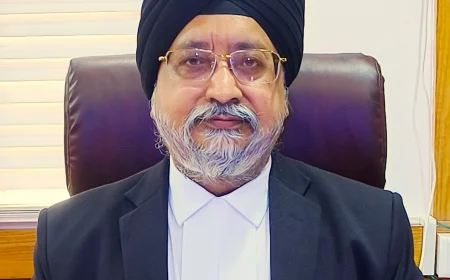
Ashish Kumar Saxena, Director at the Government e-Marketplace, has been selected as Deputy Chief Executive Officer of GeM for a tenure up to January 2029.


Ashish Kumar Saxena, Director at the Government e-Marketplace, has been selected for deputation to GeM as Deputy Chief Executive Officer for a tenure up to January 3, 2029, covering a combined tenure of seven years across both stints. He is an officer of the Indian Railway Service of Signal Engineers.
The Government e-Marketplace is the central online procurement platform for goods and services bought by central and state government departments, public sector undertakings and autonomous bodies. Set up in 2016 and run as a special purpose vehicle under the Department of Commerce, it has grown into the mandatory channel for a wide range of common-use items, with gross merchandise value crossing lakhs of crores annually. The Deputy Chief Executive Officer tier handles product categories, seller onboarding, platform operations and the policy interface with buying ministries. Buyers on the platform range from central ministries and their attached offices to state departments that have signed memoranda of understanding, along with public sector undertakings, autonomous bodies and local bodies. Sellers include manufacturers, resellers and service providers, with separate registration and verification requirements for each category.
Saxena belongs to the Indian Railway Service of Signal Engineers, the service responsible for signalling and telecommunication systems on the railways, covering interlocking, train control, block working and the communication backbone along the track. Officers of the service work on installations that carry direct safety consequence, and the procurement of signalling equipment is among the more technically specified purchase lines on the railways. He has been serving at GeM as Director, which is why the present order is framed as a continuation rather than a fresh induction.
His earlier stint at GeM in the Director role placed him inside the platform's operations before the elevation. The combined seven-year tenure reference in the order accounts for both periods together. Signal and telecommunication work on the railways also carries a heavy procurement component, from relay and interlocking equipment to optical fibre and train radio systems, which places officers of the service on both the technical specification side and the purchase side of the same contracts.
Deputations to GeM draw from across the central services, since the platform sits between technology operations and procurement policy. Continuing an officer already familiar with the platform's category structure and seller base avoids the learning curve that a fresh appointee would carry into a marketplace listing millions of products across thousands of categories. The platform's operating model has evolved through successive phases, with services added alongside goods and with categories such as transport hiring, manpower outsourcing and consultancy brought onto the same marketplace framework. Each new category requires a specification template, a bid structure and a dispute mechanism appropriate to what is being bought, which is where the category management function sits.
GeM's operating challenges run to seller verification, quality disputes on delivered goods, price benchmarking against market rates, and the recurring question of how much buying discretion remains with departments once a category is mandated on the platform. Micro and small enterprise participation, and the payment timelines that determine whether small sellers stay on the platform, are the other running pressures. The other recurring question is price discovery. The platform provides comparison against last purchase prices and market benchmarks, and buyers may run reverse auctions or bid processes on top of direct purchase for higher-value requirements. Where a category has few sellers, the benchmarking loses force, which is the point procurement audits have repeatedly returned to.
The appointment runs up to January 3, 2029. Saxena moves up from the Director post at the same organisation.